Paver sealing has a reputation problem. Plenty of homeowners think of it as a cosmetic upsell — a way to make a driveway look glossy for a while. That’s an understandable read, because a badly done seal job is exactly that.
Done properly, though, sealing is a maintenance decision, not a decorative one. Here’s what it actually changes about a paver surface, what it doesn’t, and how often it needs redoing in a climate like this one.
Pavers are more porous than they look
A concrete paver looks dense. Under a microscope it’s closer to a sponge — a matrix of cement and aggregate riddled with fine voids. In Southwest Florida those voids do three things you’d rather they didn’t.
They hold water. Which means they stay damp long after the surface looks dry, and damp plus shade plus warmth is exactly what algae and mildew need.
They absorb stains. Oil from a car, tannins from leaf litter, rust from an irrigation head or a patio chair — all of it soaks in rather than sitting on top, which is why a stain that’s been there a month is so much harder to remove than one from yesterday.
They lose their joint sand. The polymeric sand between pavers is what locks the field together. Rain, pressure washing and traffic pull it out over time, and once joints are low, pavers start to shift, rock and open gaps for weeds and ants.
What sealer actually does about that
A quality paver sealer does three specific jobs:
It occupies the pores. Water, oil and stains sit on the surface long enough to be wiped or rinsed off instead of soaking in. This is the single biggest practical benefit — a sealed driveway is dramatically easier to keep clean.
It stabilises the joint sand. Most sealers used on driveways and patios bind the top layer of joint sand into a firm crust. That keeps sand in the joints, keeps pavers from rocking, and makes weed and ant intrusion far less likely.
It slows organic growth. Sealer doesn’t make pavers immune to algae — nothing does in this climate — but by keeping the surface less porous and less persistently damp, it meaningfully slows how fast growth takes hold, particularly on shaded sections.
What it does not do is make pavers maintenance-free. Sealed pavers still need washing. They just wash far more easily, and they don’t lose ground between washes the way unsealed pavers do.
Wet look versus matte — a real decision
This is where most of the regret happens, so it’s worth deciding deliberately.
Wet look (high gloss) deepens color dramatically, as if the pavers are permanently just-rained-on. It’s striking on darker pavers and on pool decks and entries where the drama is wanted. Two things to know: it shows wear and traffic patterns more clearly, and on a pool deck a gloss finish can be slicker underfoot unless a grip additive is used.
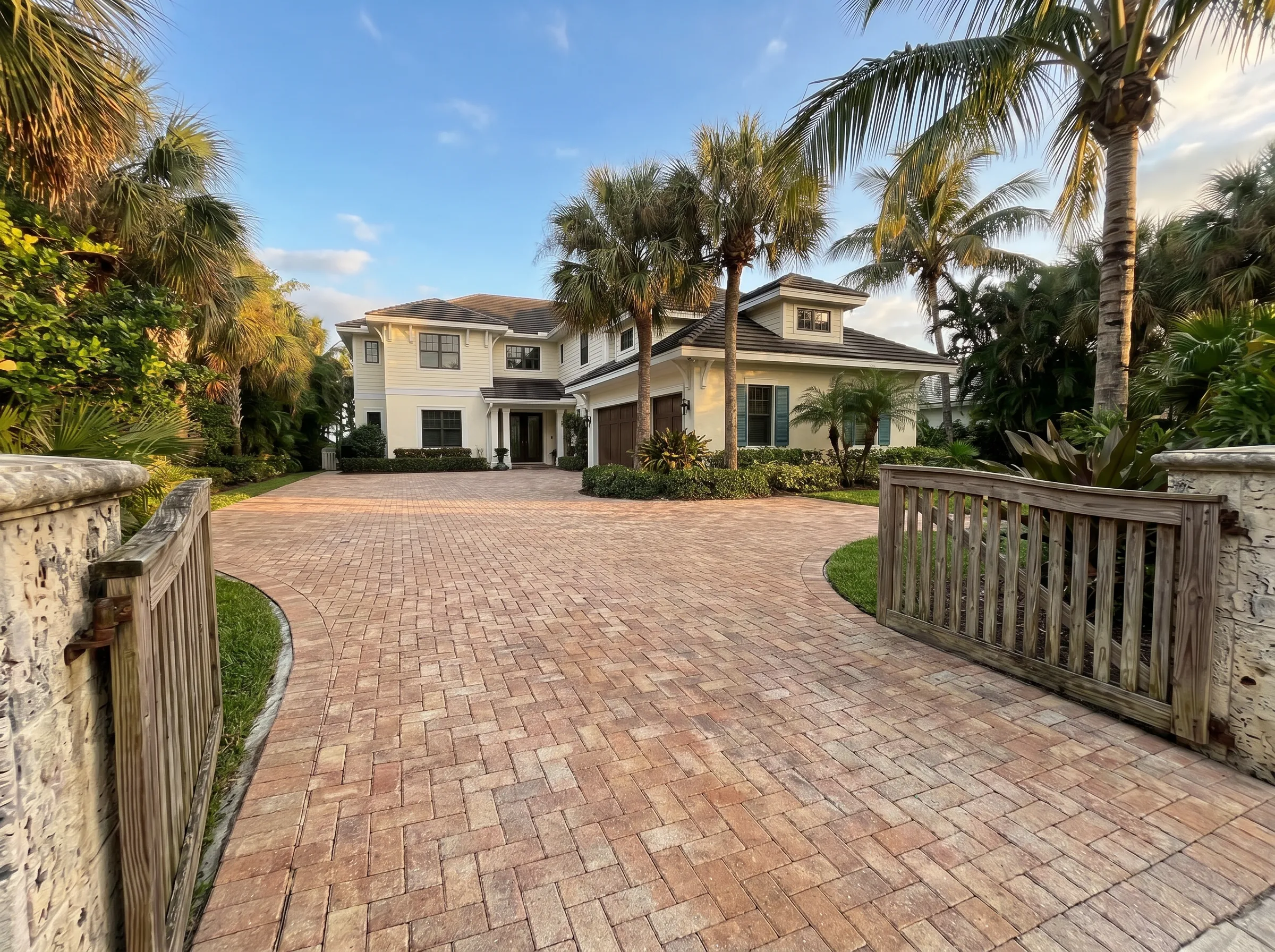
Matte or natural finish protects identically but leaves the surface looking close to how the pavers looked when they were new and dry. It hides wear better and ages more gracefully. For most driveways and walkways, this is the finish people are happiest with a year later.
There’s no performance winner here — it’s genuinely aesthetic. The mistake is choosing gloss because the sample board looked good without picturing the whole driveway in full sun.
Preparation is most of the job
An honest thing about this work: the sealing is the easy part. The preparation is the job.
A paver surface has to be thoroughly cleaned, any weeds and growth removed from the joints, stains treated, joint sand replaced where it’s low, and then the whole surface allowed to dry completely — usually at least 24 hours, longer in humid stretches. Only then does sealer go down.
Skipping any of that produces the failures people have seen and remember. Sealing over damp pavers traps moisture and turns the finish cloudy or milky white. Sealing over algae locks the growth under a clear coat where nothing can reach it. Sealing over low joints locks in a surface that’s already moving.
If you’ve ever seen a driveway with a hazy white bloom across it, you’ve seen what sealing damp pavers looks like. It isn’t a bad product — it’s a rushed schedule.
How often to reseal in Florida
The honest answer is a range, because sun exposure drives it more than anything: typically every two to four years.
- Full-sun driveways sit at the short end. UV is what breaks sealer down, and a west-facing driveway with no shade takes the most of it — often closer to two years.
- Covered lanais and shaded patios sit at the long end, sometimes five years, because they’re taking almost no direct UV.
- Pool decks are their own case. Constant water, chlorine or salt, and foot traffic all shorten the interval, usually to about three years.
You don’t have to track the date. The surface tells you: sprinkle water on it. If it beads or sits on top, the seal is intact. If it darkens the paver immediately and soaks in, the seal is spent and it’s time.
Is it worth it?
Not always, and it’s worth saying so plainly. If a paver surface is shaded, rarely used and already stained through, sealing it locks in the state it’s in — clean it and live with it, or plan on a proper restoration before sealing.
But for a driveway, entry or pool deck that’s in decent shape and that you want to keep looking sharp without fighting it every few months, sealing is one of the few exterior maintenance decisions that pays for itself in reduced effort. The surface stays cleaner, washes faster, holds its joints and keeps its color.
If you’re not sure which category yours is in, send us a photo and we’ll tell you straight — including when the answer is that sealing isn’t what your pavers need right now.