
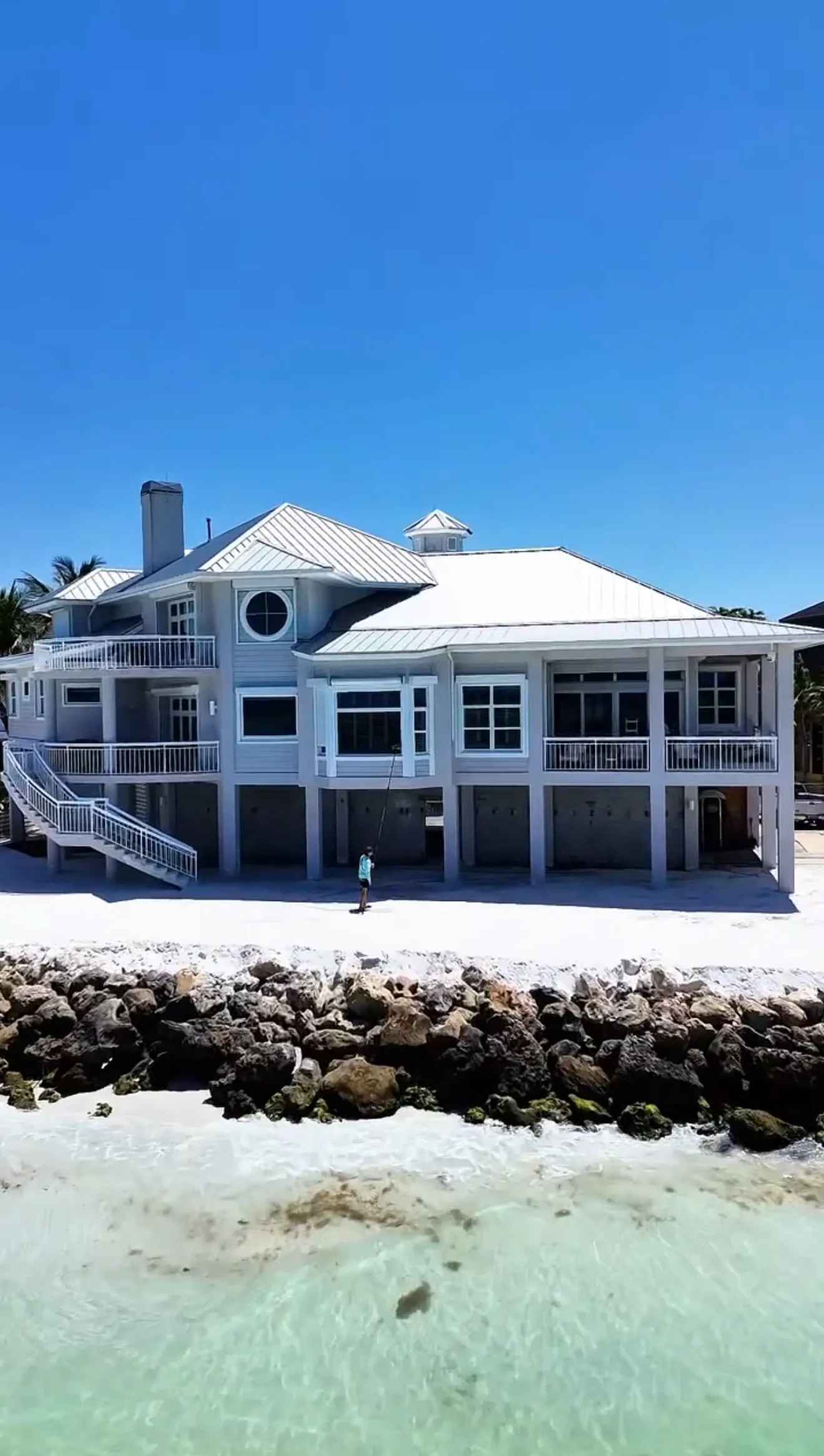
There is no single right answer to how often windows should be cleaned, and anyone who gives you one number is guessing. On the Sarasota coast, the honest answer is that how close you are to open water matters more than the month on the calendar. Two identical houses — one on Longboat Key, one ten minutes inland in Lakewood Ranch — will not need the same schedule, and expecting them to is how people end up frustrated with their glass.
Here’s the cadence we actually work from, and the signals that tell you it’s time regardless of what the calendar says.
Why proximity to the water drives everything
Salt doesn’t stay in the Gulf. Onshore wind lifts a fine aerosol off the surf and carries it inland, where it settles on every horizontal and vertical surface it meets. Glass is the surface where you notice it first, because glass is the only one you look through.
Salt is also hygroscopic — it pulls moisture out of humid air. So a salted pane doesn’t simply sit there dusty. It goes slightly damp in the morning, collects airborne dust and pollen into that film, dries in the sun, and repeats. Each cycle bonds the layer a little tighter. That’s why a Gulf-front window can look hazy three weeks after a cleaning while an inland window still looks fine at four months. We wrote more about the mechanism in why windows film over so fast near the Gulf.
A realistic schedule by location
These are exterior intervals. Interiors almost always go longer — more on that below.
Gulf-front and beachfront: every 1–2 months
If you can hear the surf, your exterior glass is taking direct salt spray. Homes on Lido Key, Casey Key and the Gulf side of Siesta and Longboat generally look their best on a monthly or six-week exterior rotation. Stretch it much past two months and you stop cleaning dust and start removing bonded mineral deposits, which takes longer and costs more.
Bayfront and canal-front: every 2–3 months
Bird Key, the bay sides of Longboat and Siesta, and canal-front homes off the intracoastal see real salt exposure but not direct surf aerosol. A quarterly exterior rotation holds up well for most of these homes, with a tighter interval on the elevation that faces the water.
Inland Sarasota, Venice and Lakewood Ranch: every 3–4 months
Away from open water, the dominant offenders shift from salt to irrigation overspray, lawn dust, pollen and construction dust from nearby development. Quarterly keeps most of these homes looking sharp; three times a year is usually the floor before hard-water spotting starts to set in.
Anywhere with sprinklers hitting the glass: on its own schedule
This one surprises people. A misaimed sprinkler head will ruin glass faster than the Gulf will. Florida irrigation water is loaded with calcium and magnesium, and when it dries on a pane in full sun it leaves mineral deposits that etch into the surface over time. If you have heads throwing water onto windows, the fix isn’t a shorter cleaning interval — it’s moving the heads. Do that first, then clean.
The signs it’s overdue, whatever the date
- Haze in low-angle light. Face the glass toward the morning or evening sun. A film that’s invisible at noon shows up clearly at a low angle.
- A gritty feel. Run a fingertip across the outside of a pane. Smooth is dust. Gritty is salt and mineral, and grit means it’s time.
- Spots that don’t rinse off. If a rain shower leaves the window looking worse rather than better, the deposits are bonded and won’t self-clean.
- You’ve started closing the blinds. People adapt to dirty glass without noticing. If the shades on one elevation live closed now, that’s usually why.
Interiors run on a different clock
Exterior glass takes the weather; interior glass takes life. Most homes here are comfortable with interiors twice a year, and one or two elevations — kitchen glass, doors near a pool, anything at child or dog height — more often.
There’s one local exception worth knowing. If you run the AC hard with the windows closed most of the year, interior surfaces stay cleaner than you’d expect. But if the house opens up in the cooler months, salt air comes inside with it, and interiors start behaving like exteriors. Homes that live open through winter usually want interiors done at the start and end of that stretch.
Seasonal homes: two cleanings, well timed
If the house sits empty for part of the year, forget intervals and think about bookends. One cleaning just before you arrive, so the house looks right the day you walk in, and one after you leave, so months of salt aren’t left to bond on the glass while nobody’s looking. Salt left to sit through a full summer is the single most common cause of glass that no longer comes fully clear.
Why cadence changes the work itself
Regular cleaning isn’t just cosmetic maintenance — it’s what keeps the job simple. On a home cleaned on schedule, exterior glass is a straightforward rinse with a water-fed pole and deionized water: no minerals in the water, so it dries with no spots and nothing to towel off. On a home that’s gone a year or more, the same pane may need mineral treatment and hand work before it will come clear, and deposits that have etched the surface may never fully disappear.
That’s the real argument for a schedule. It isn’t that dirty windows are a crisis. It’s that glass maintained on a rhythm stays easy, while glass left alone eventually becomes a restoration job.
The short version
- Gulf-front: exterior every 1–2 months.
- Bayfront and canal-front: exterior every 2–3 months.
- Inland: exterior every 3–4 months.
- Interiors: twice a year, more on the elevations that get used.
- Seasonal homes: one before arrival, one after departure.
- Sprinklers on the glass: fix the heads before anything else.
Not sure which bracket your home falls into? Send us a message with your neighborhood and which way the house faces, and we’ll tell you what we’d actually recommend — including if the answer is “less often than you think.”